01 · ONE CENTRALIZED VIEW
Continuous monitoring, one operational picture.
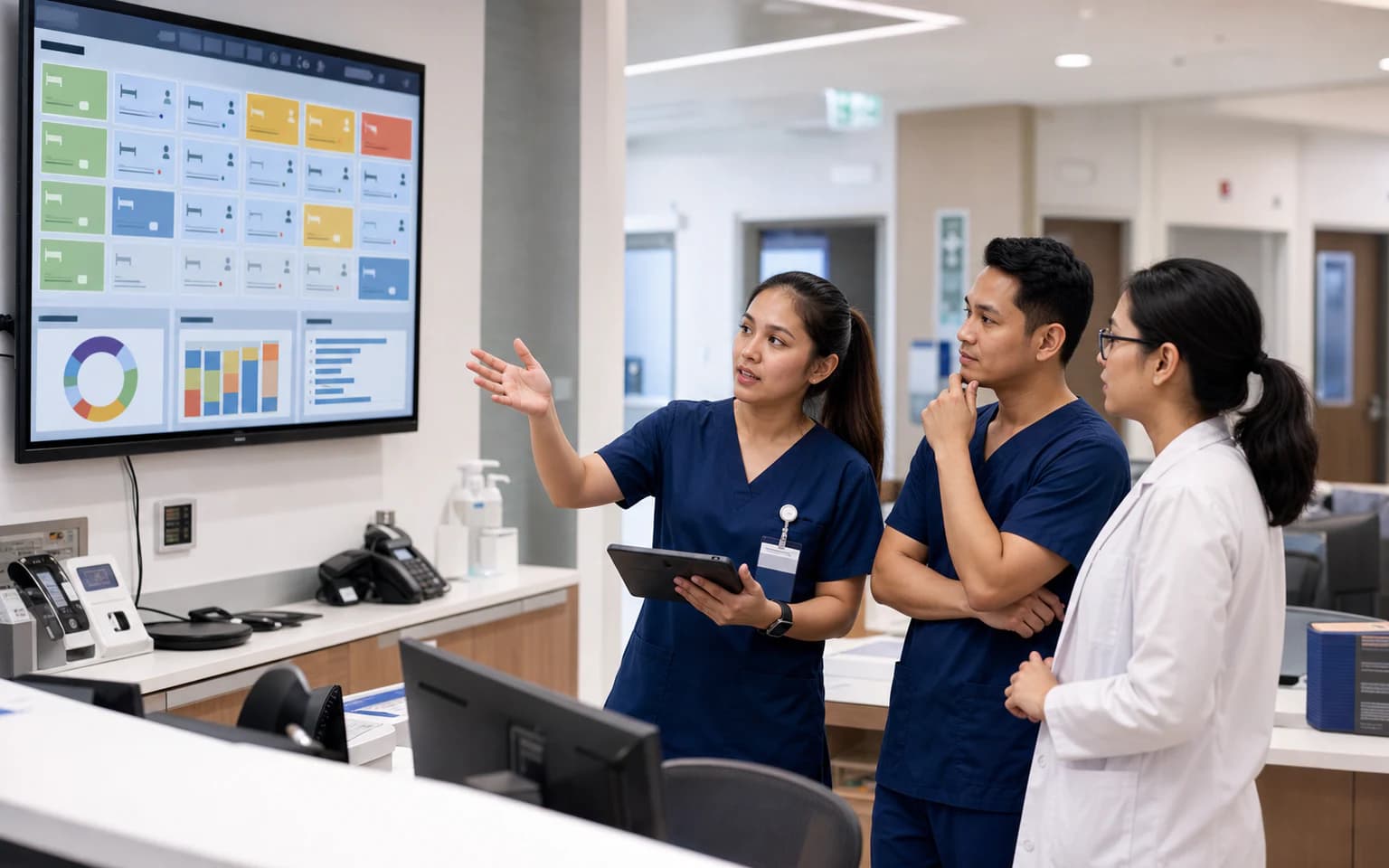
Bring compatible bedside data into one ward-wide Smart Ward view.
BED 4A-14 · LIVE102 bpm
SpO₂94 %NIBP142/95 mmHgEWS4 · REVIEW

 Strategic collaboration
UNIFIED PATIENT MONITORING · SMART WARD INFRASTRUCTURE
Qmed Asia and Intel are building a unified patient-monitoring platform that brings data from connected bedside devices into one centralized Smart Ward dashboard— optimized on Intel Core Ultra processors.
Read the TechNode Global announcementEdge processingOptimized on Intel Core UltraThe collaboration brings Intel’s patient-monitoring reference architecture together with Qmed Asia’s healthcare software and clinical expertise.
Patient-monitoring data moves from compatible bedside devices through an Intel-optimized edge layer and into one Qmed Smart Ward dashboard.

Qmed Connect captures data from compatible bedside devices, consolidates it at the edge, and surfaces it in one ward-wide operational view.
Continuous monitoring, EWS signals, and mixed-vendor device data come together in one operational layer.
Bring compatible bedside data into one ward-wide Smart Ward view.

Architecture optimized on Intel Core Ultra processors.
Build the base for governed AI-enabled clinical workflows.
AI-enabled workflows support care teams. Clinical review and decision-making remain with clinicians.
Strategic collaborationQmed Asia’s healthcare software and clinical domain expertise combine with Intel’s Patient Monitoring Hub Reference Implementation and an architecture optimized on Intel Core Ultra processors.
CLINICAL SYSTEM LAYEREDGE ARCHITECTURE LAYERQmed Connect is being deployed in hospitals across Malaysia, with an architecture designed to support connected care across the broader region.
Hospital deployments are establishing a real-world base for broader regional scale.
Clear answers about the platform, the collaboration, and deployment.
Qmed Connect is Qmed Asia’s in-patient and Smart Ward platform. It consolidates data from connected bedside medical devices into a centralized dashboard for continuous monitoring, Early Warning Score alerts, and ward-wide clinical visibility.
The collaboration combines Intel’s Patient Monitoring Hub Reference Implementation with Qmed Asia’s healthcare software and clinical domain expertise. The announced platform is optimized on Intel Core Ultra processors for scalable edge computing.
The platform is designed for vendor-neutral medical-device integration, so the starting point is normally the equipment and systems a hospital already operates. Device, interface, and workflow compatibility is validated during deployment planning.
Deployment is already underway in hospitals across Malaysia. The collaboration is intended to support digital transformation in Malaysia and create a foundation that can extend across the broader region.
Tell us about your devices, hospital systems, and clinical priorities. We’ll map a practical starting point for your Smart Ward.
Strategic collaboration